
For product managers
Stop triaging in a spreadsheet
Requests arrive with votes attached, merge when they duplicate, and carry a status customers can see. No weekly export to keep it honest.
HomeFeature Requests
Get startedReplace the shared spreadsheet, the #feature-requests Slack channel, and the sales team's wishlist with one board your customers can actually see. Votes, comments, duplicates, and status — with an API and a webhook on all of it.
Book a demo →6 statuses
Pending, under review, planned, in progress, completed, declined.
4 SDKs
React, React Native, Flutter and Swift — headless hooks and components both.
Webhooks
wish_status fires on every transition, with delivery logs and retries.
Capture
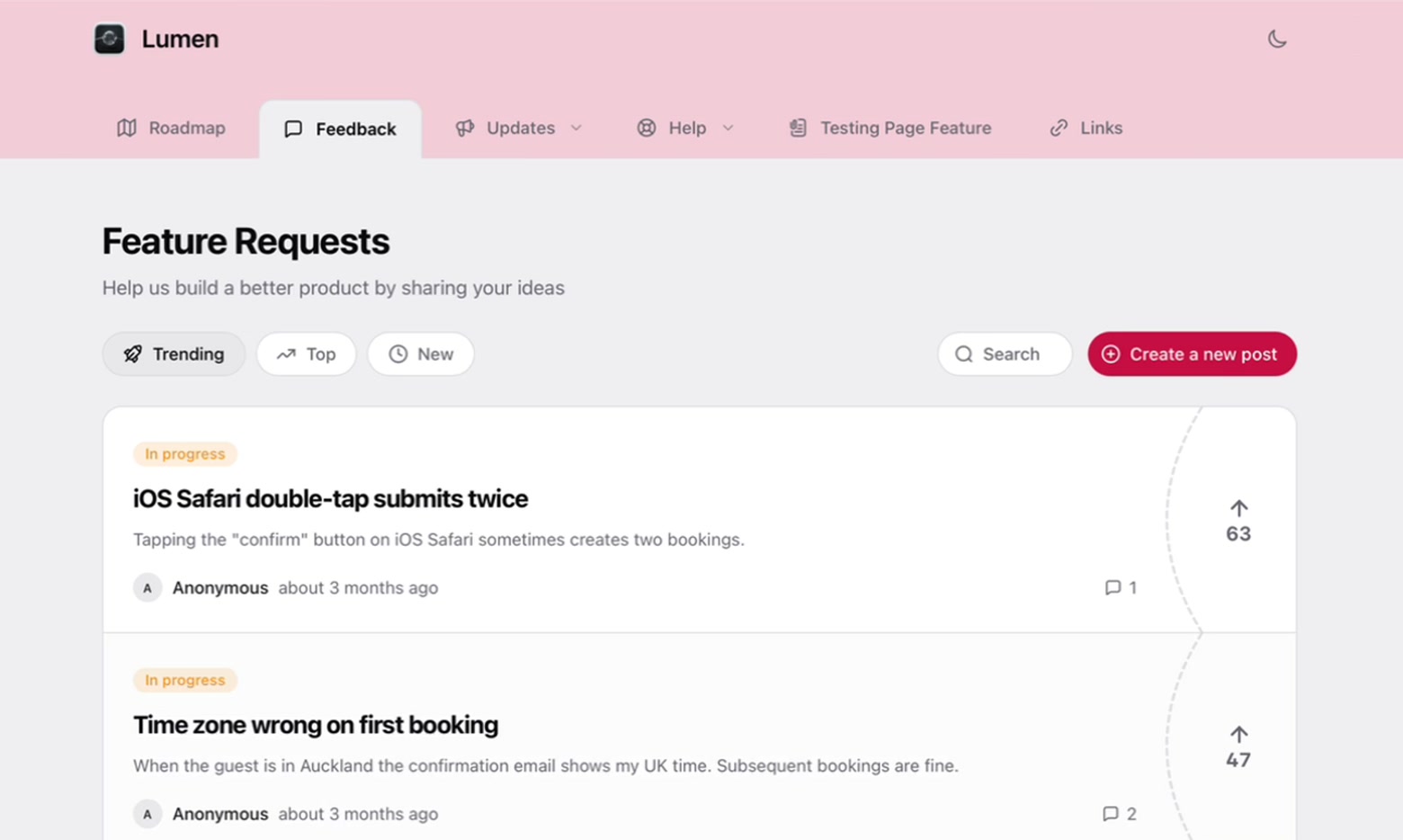
A hosted board on your own domain, or the same board rendered inside your product through an SDK. Customers vote without an account — votes are deduplicated by fingerprint — and comments thread underneath, with team replies carrying an Official badge.
Tidy
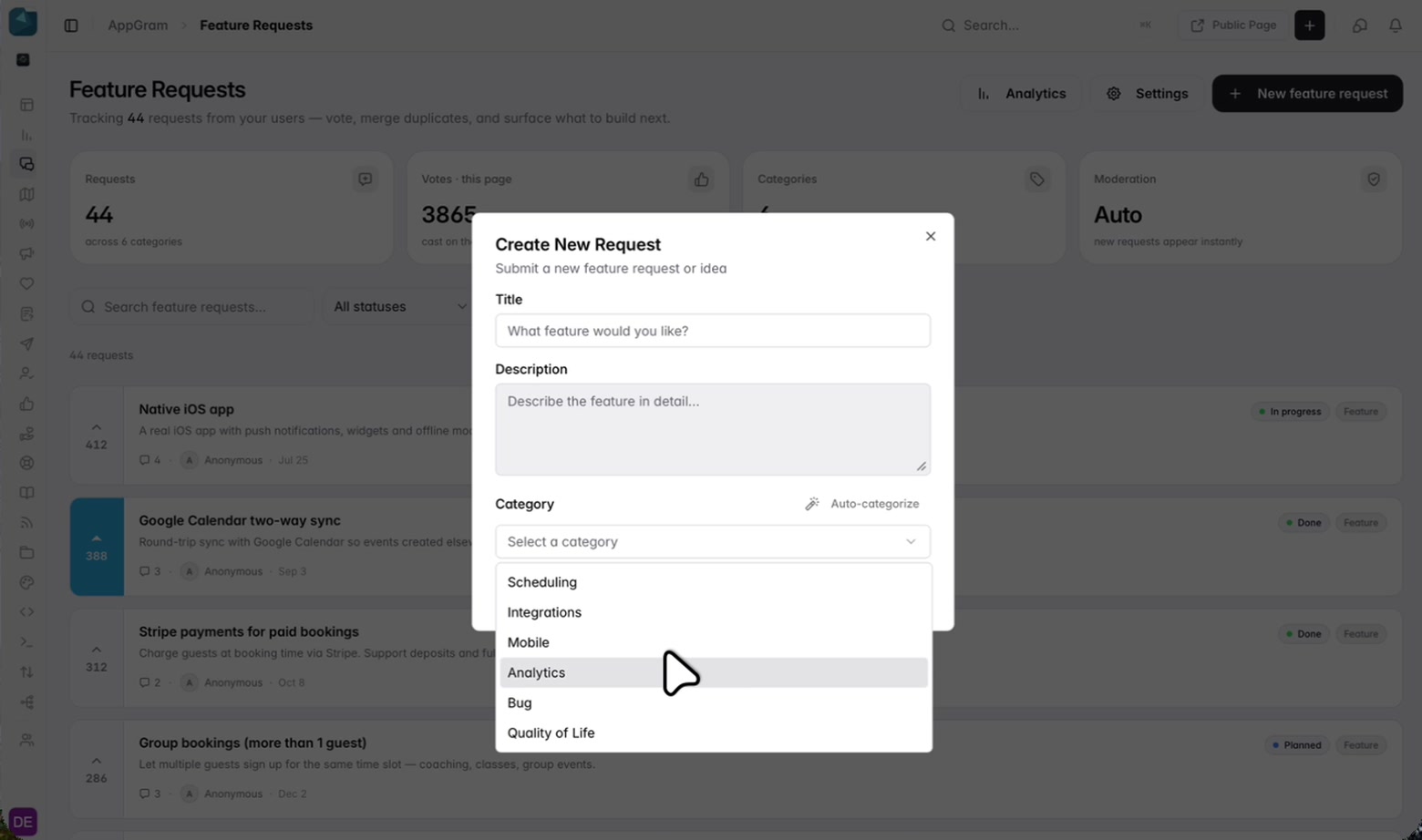
The thing that kills a public board is not too few requests, it is forty near-identical ones nobody has sorted. Auto-categorize reads a batch and proposes a category from your own list, duplicates merge and bring their votes with them, and moderation can hold portal submissions until someone has looked.
Prioritize
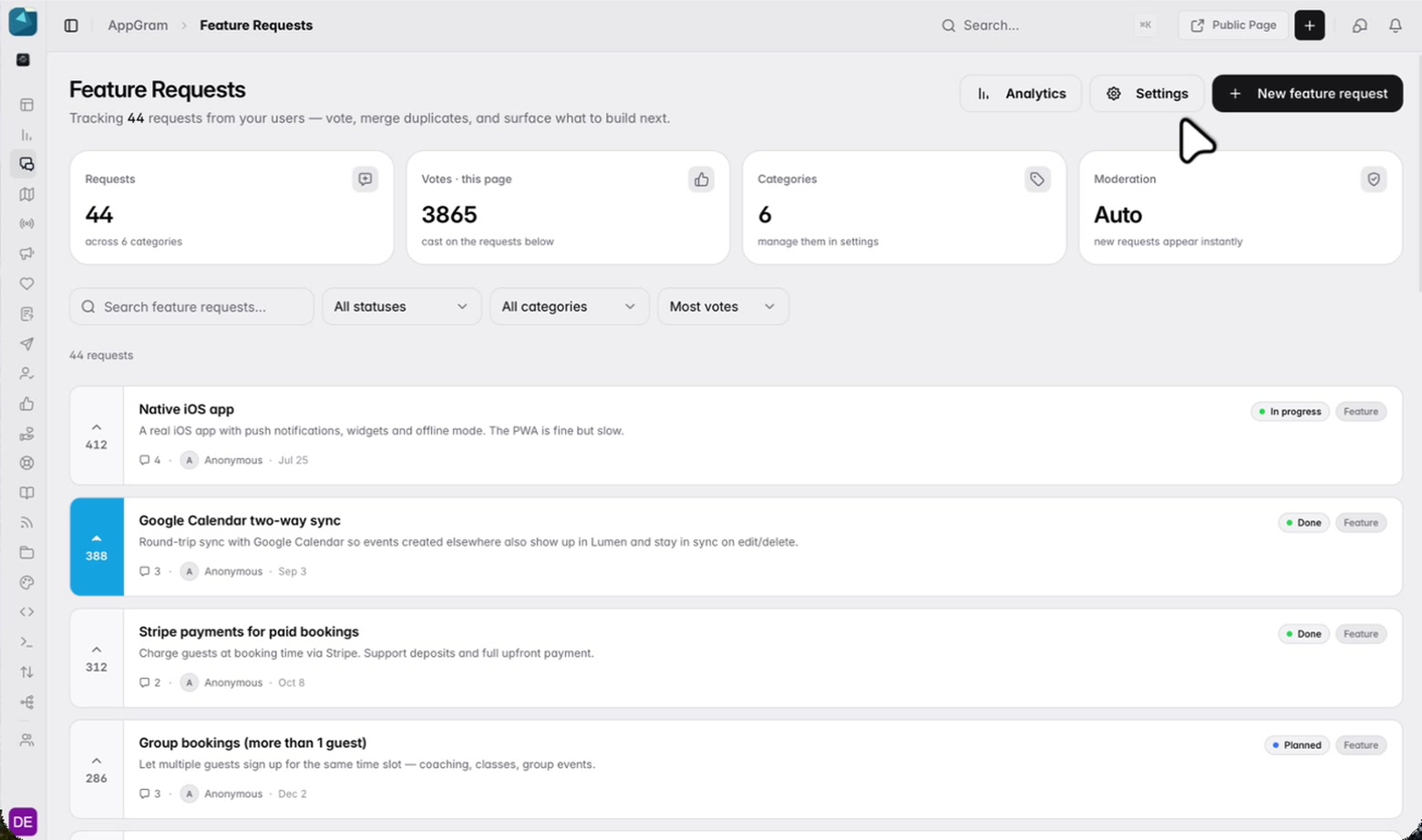
Rank by votes, cut by status, category or priority, and open a request to see its vote curve and the conversation under it. The whole board is available through scoped API keys, so planning can happen wherever you already plan.
Close the loop
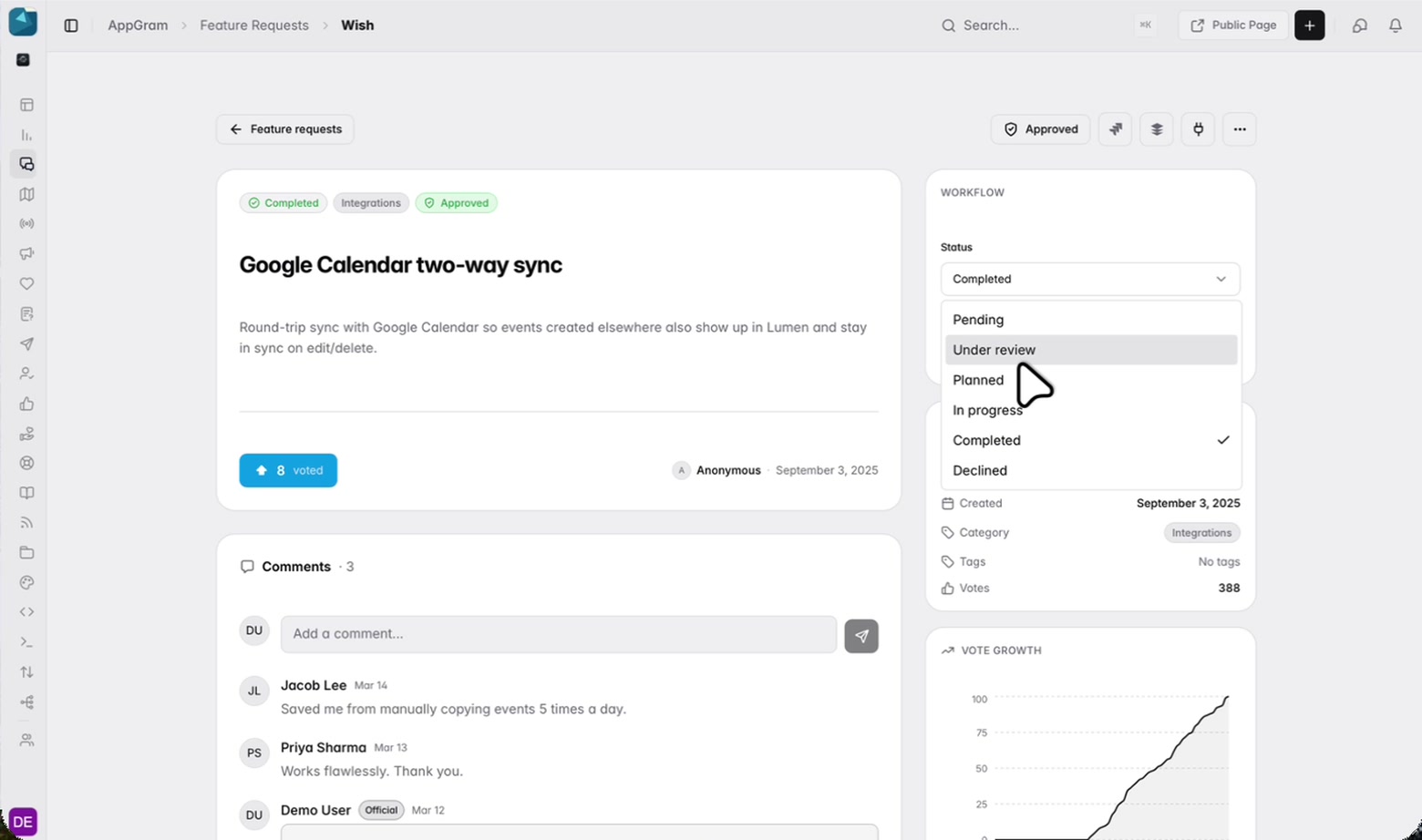
Moving a request emits the wish_status webhook and the wish_status_changed automation trigger. Post it to Slack, tag the customer, open an issue in Linear or Jira, or call your own endpoint — the board does not assume where your customers are listening.
Who uses it
For product managers
Requests arrive with votes attached, merge when they duplicate, and carry a status customers can see. No weekly export to keep it honest.
For engineering
Scoped keys read and write requests, webhooks fire on transitions, and a request can become a Linear or Jira issue. Nothing requires opening the dashboard.
For founders
A public board with real statuses and shipped items is the cheapest trust signal you can put on your domain.
Connected
Every module writes to the same customer graph, so data captured here shows up wherever it is useful — no connectors to authorize, no sync to babysit.
See all integrations →AppGram modules
FAQ
No. Votes from the hosted board are deduplicated by fingerprint, so a refresh does not count twice. Leaving a comment only needs an email.
Yes — the hosted board is public, which is what lets people vote without an account. If you need feedback that is not publicly visible, collect it through Support Tickets or a Form and move what matters onto the board yourself.
Featurebase is supported today and brings posts, votes, comments and statuses across as a resumable background job. For anything else, the REST API accepts requests, votes and comments directly.
You can push a request to Linear or Jira to open an issue from it. Status changes on the board fire a webhook and an automation trigger, so reflecting progress back is a flow you configure rather than a sync you inherit.
The change emits the wish_status webhook and the wish_status_changed automation trigger. From there you can post to Slack, send email through your own provider, or call your own endpoint — whatever reaches the people who asked.
Yes. The React, React Native, Flutter, and Swift SDKs ship both headless hooks and pre-built components, so you can render the board in your own UI or drop in a themed widget.
Get started
Everything you were bolting together — feedback, roadmap, changelog, help, support, status, forms — in a single workspace with one API and one bill.
Cancel anytime. Yours to test on real customers.